

Tooth Extraction
Clear information, careful assessment and a treatment plan designed around your comfort and long-term oral health.
What is tooth extraction?
Tooth extraction removes a tooth from its socket. We first assess whether it can be saved and explain the removal approach, healing and any replacement needs.
When is it considered?
- A tooth is too damaged to restore predictably.
- A tooth or its supporting tissues has a problem that cannot be managed suitably by preservation.
- Removal forms part of a specific orthodontic or other agreed treatment plan.
What is the aim?
Resolve the tooth problem with a clear plan for the gap. The choice follows an individual assessment.
Tooth extraction: step by step
Three stages show assessment, removal and early socket healing. Your treatment plan depends on the clinical findings.
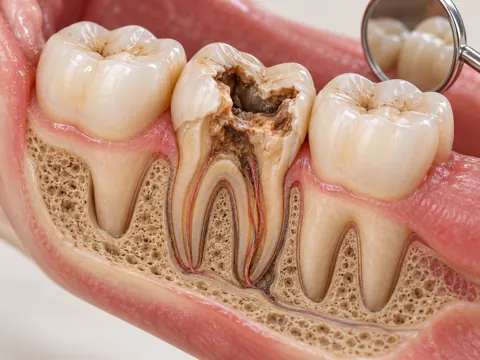
01 · Assess the tooth and roots
We examine whether the tooth can be restored, its roots and surrounding support, then discuss suitable alternatives.
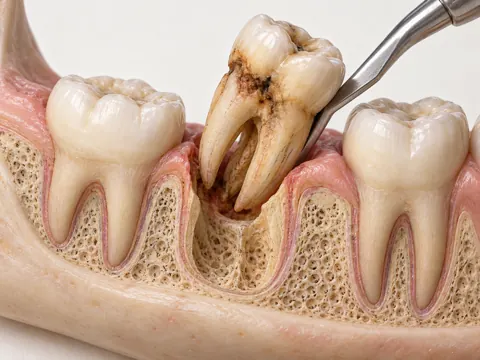
02 · Numb and remove the tooth
Anaesthesia and the removal technique depend on tooth position, roots and complexity. The procedure may be simple or surgical.
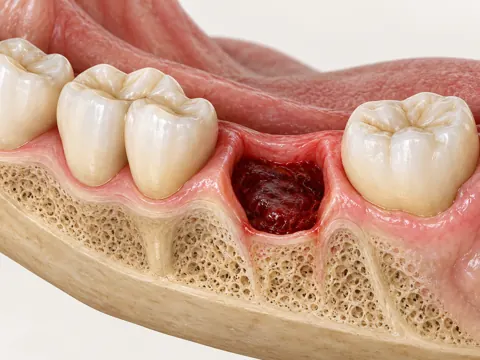
03 · Protect the healing socket
A stable clot covers the socket during early healing. Follow the aftercare instructions to help protect it.
Illustrative cutaway views explain the stages. The actual technique depends on the tooth and clinical findings.
Treatment questions worth discussing
Can a painful tooth be saved instead?
Pain alone does not mean extraction. Depending on the diagnosis, a Dental Filling, Root Canal Treatment or Re-Root Canal Treatment may preserve a restorable tooth. We compare the outlook before deciding.
What is the difference between simple and surgical extraction?
A simple extraction removes an accessible tooth through its socket. Surgical removal may involve gum access, removing a little surrounding bone or dividing the tooth. This is a method of removal, not a separate replacement treatment.
What happens to the gap afterward?
Discuss chewing, appearance, the bite and your preferences. Dental Implants, a bridge or a Denture may be considered when suitable. Not every gap needs the same solution, and replacement timing depends on healing.
Before your treatment
- Bring your medicine list and tell us about allergies, bleeding problems, diabetes and previous reactions.
- Mention blood thinners, osteoporosis medicines and any history of jaw radiotherapy. Do not change prescribed medicines yourself.
- Ask about the anaesthetic, recovery arrangements and the full treatment estimate before agreeing.
Aftercare & healing reviews
At home
- For the first 24 hours, avoid rinsing, forceful spitting or touching the socket. Protect the clot.
- Choose soft food and avoid hot food or drinks while numb. Avoid smoking and follow the written cleaning advice.
- After 24 hours, gentle warm salt-water rinses may be advised. Clean other teeth carefully.
Reviews & concerns
- Follow the pain-relief plan made for your health and medicines.
- Contact us for severe or worsening pain, bad taste, fever or swelling.
- For ongoing bleeding, bite firmly on clean gauze as instructed and seek help if it does not settle.
Bleeding that will not stop, increasing facial swelling or feeling unwell needs urgent assessment. Trouble breathing or swallowing is an emergency.
Frequently asked questions
Does tooth pain always mean removal?
No. We examine the cause and discuss whether a filling, pulp treatment or Root Canal Treatment can save the tooth.
Will the extraction hurt?
Local anaesthetic numbs the area. Pressure can be felt, but tell us about sharp pain so we can stop and address it.
Why might a broken tooth need surgery?
If little crown remains or roots are difficult to access, controlled surgical access may help remove the tooth safely.
Do I always need stitches?
No. The wound and removal method determine whether stitches are useful. We explain whether any stitches need removal.
When can I eat after a tooth extraction?
Follow your instructions and be careful while numb. Start with suitable soft food; avoid hot food or drinks until sensation returns.
When can I rinse my mouth?
Avoid rinsing or forceful spitting for the first 24 hours. Afterward, follow the gentle cleaning and rinsing advice given for your wound.
What is dry socket?
It is painful delayed socket healing associated with loss or breakdown of the clot. Increasing pain after removal needs review; do not treat the socket yourself.
Do I need antibiotics after every extraction?
No. We prescribe them only when the clinical findings and your health justify them. They do not replace socket care or assessment.
Should I stop my blood thinner before removal?
Do not stop prescribed medicines yourself. Tell us the name and dose so we can plan treatment and coordinate medical advice if needed.
How much does tooth extraction cost in Mymensingh?
We give an estimate after assessment. Ask whether imaging, surgical removal, stitches and review are included, and discuss replacement costs separately.
Patient information sources
General treatment information. Your care plan follows an examination.
Ready to discuss your treatment?
Visit DentCare Dental Clinic in Charpara Mor, Mymensingh. We will assess your condition, explain the suitable options and help you choose the next step with confidence.