

Root Canal Treatment
Clear information, careful assessment and a treatment plan designed around your comfort and long-term oral health.
When might you need root canal treatment?
These signs can have several causes. An examination and an appropriate X-ray help determine whether the pulp is affected and whether the tooth can be saved.

Hot or cold pain that lingers
If pain continues after the food or drink is removed, the pulp may be inflamed or damaged.
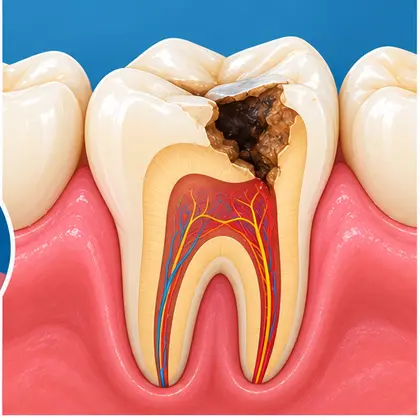
Black spot or deep cavity
A dark area or large cavity may allow bacteria to reach the nerve space inside the tooth.
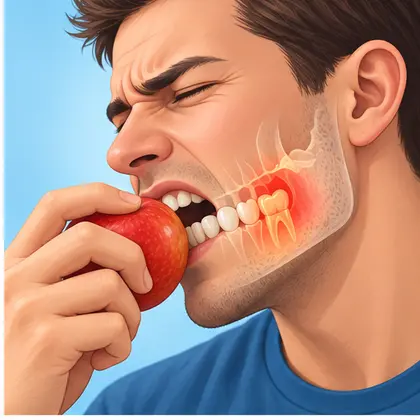
Pain when biting or chewing
Tenderness under pressure can be associated with inflammation around the root or a cracked tooth.
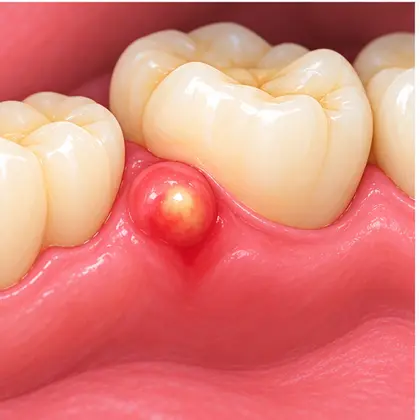
Gum swelling or a small pimple
Swelling beside a tooth can indicate drainage from an infection and needs prompt assessment.
Explore gum care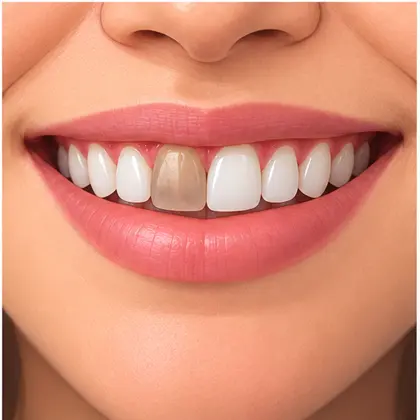
Tooth darkening after trauma
A tooth can lose vitality after an injury even when there is no obvious fracture or immediate pain.
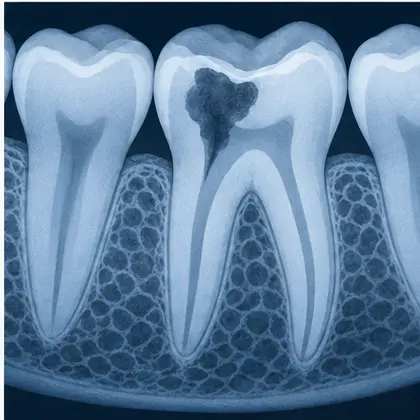
Deep cavity visible on X-ray
An X-ray may show decay close to the pulp or changes around the root before symptoms become severe.
Root Canal Treatment: what to know
Root canal treatment removes inflamed or infected pulp from the chamber and canals, then cleans, fills and seals the canal system. A final restoration protects the tooth.
When might it be needed?
Pulp disease that cannot suitably be managed by preservation treatment, or infection around the root. Symptoms alone do not confirm the diagnosis.
The choice follows an examination. Symptoms alone cannot identify the right treatment.
How root canal treatment saves a tooth
We treat the spaces inside the roots, then seal and protect the tooth so it can keep working for you.
01 · Clean the canals
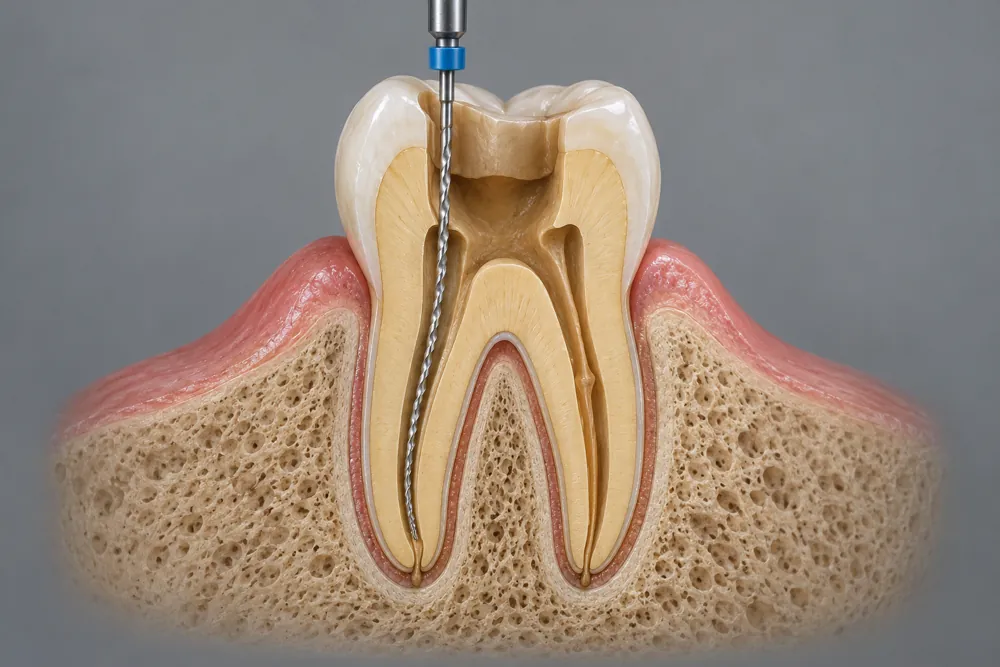
After assessment, local anaesthesia and rubber-dam isolation, we open the tooth and clean and shape its canals. The illustration shows a fine instrument working inside one canal.
02 · Fill and seal
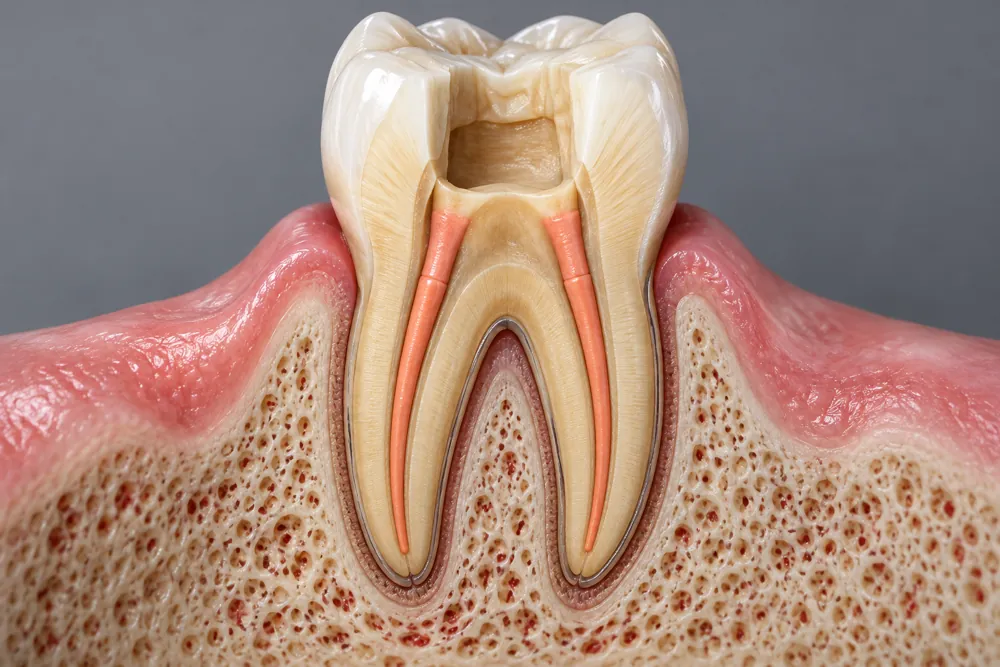
The cleaned canal spaces are filled with gutta-percha and a suitable sealer. The aim is a well-sealed canal system; some teeth need more than one visit.
03 · Restore and protect
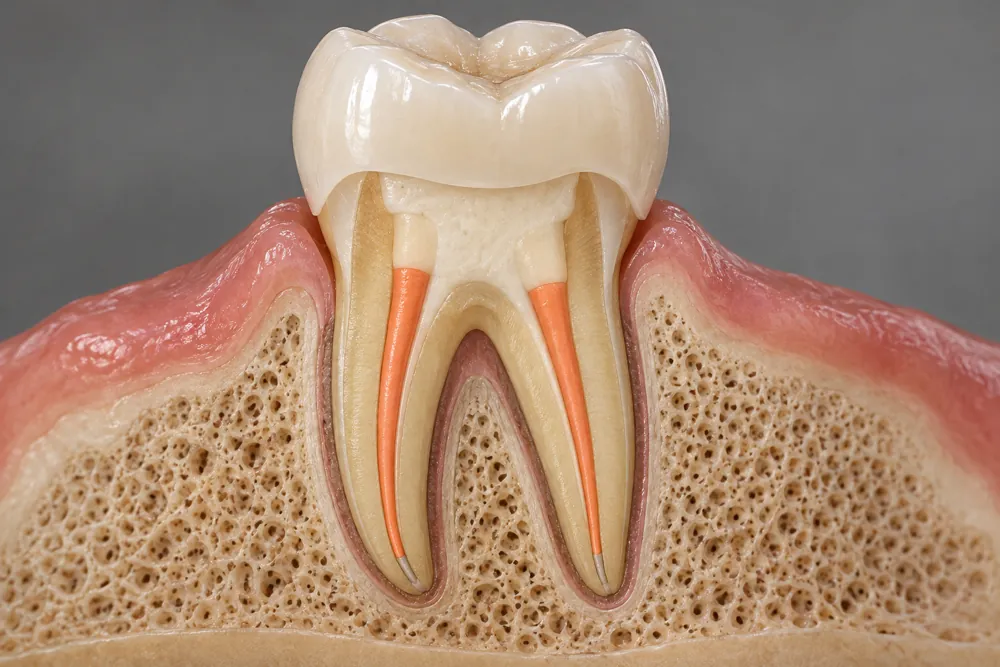
A suitable final filling seals the access. An onlay or crown may provide extra protection when remaining structure and biting forces call for it. Not every tooth needs a crown.
These cutaway illustrations explain the treatment and are not patient photographs. The number and shape of canals vary. Your final restoration is selected individually.
Single-visit root canal treatment in Mymensingh
Looking for a single-sitting root canal, one-visit RCT or root canal in one day? These usually mean cleaning, shaping and filling the root canals during one treatment appointment. We assess your tooth first to decide whether this approach is appropriate.
Why patients ask for it
- Fewer treatment appointments and less travel.
- Can be convenient for work, study or a busy schedule.
- The canal treatment may be completed in one sitting when suitable.
What we check first
- The diagnosis, symptoms and appropriate X-rays.
- Canal anatomy, access and the ability to clean, dry and seal the canals.
- Time needed, your comfort and whether staged treatment would be helpful.
One visit does not always mean the whole restoration is finished. The final filling, onlay or dental crown and review may require separate appointments. Your treatment plan will explain this clearly.
When might more than one visit be better?
Complex canals, retreatment, persistent drainage, difficulty completing cleaning or drying, or the need for medication and reassessment may lead us to stage treatment. Infection alone does not automatically determine the number of visits. We recommend the schedule that suits the findings rather than rushing to meet a one-visit target.
Is single-visit root canal treatment more successful or pain-free?
Neither visit schedule guarantees success or no discomfort. Evidence does not show a clear difference in radiographic healing between the approaches overall. Temporary tenderness can follow either. Careful cleaning, sealing, final restoration and follow-up matter more than the appointment count alone.
How long does single-sitting RCT take and what does it cost?
The time and quote depend on the tooth, number and shape of canals, complexity and required restoration. We explain the estimated appointment length, fees and whether the final restoration is included after assessment. A single visit is not automatically cheaper.
AAE patient information · Evidence on single and multiple visits
Filling, pulp care or root canal?
Each treats a different problem. We assess your tooth before recommending the option that offers a useful benefit.
Dental filling
Repairs a cavity when the pulp does not need treatment.
- Repairs missing tooth structure
- Living pulp remains
- Does not clean infected root canals
Pulp preservation
Protects suitable living pulp in carefully selected teeth.
- May avoid full root canal treatment
- Some or all living pulp is kept
- Healing needs follow-up
Root canal treatment
Treats pulp or canal disease when preservation is unsuitable.
- Cleans and seals the root canals
- Can retain a restorable natural tooth
- Needs a suitable final restoration
Where does pulpectomy fit in?
Pulpectomy for children removes pulp from the chamber and canals of a baby tooth and uses a filling material appropriate for that tooth. It is a different context from the permanent-tooth treatment on this page.
The final restoration matters
Is a root canal filling the same as a normal filling?
No. Canal filling seals the cleaned spaces inside the roots. The tooth also needs a suitable final dental filling or other restoration above them. The final seal helps protect the treated tooth.
Aftercare & follow-up
Do not bite hard on an unfinished tooth. Complete the final filling or crown plan and attend follow-up. Report swelling or worsening pain.
Frequently asked questions
Is root canal treatment painful?
Local anaesthetic usually makes treatment comfortable. Pressure or vibration may be felt; tell the dentist if you feel pain so it can be addressed. The tooth may be tender afterward for a few days.
Can I have RCT in one visit?
Sometimes. The decision depends on the tooth, canal anatomy, infection, symptoms and whether the canals can be cleaned and sealed safely. More complex cases may need additional visits.
Does every toothache need a root canal?
No. A cavity may only need a filling; gum or bite problems can also hurt. A clinical examination and sometimes an X-ray or tests are needed before deciding.
Can a painless tooth still need treatment?
Yes. A damaged or non-vital pulp and infection around the root may cause little or no pain. Examination and imaging guide the decision.
Do I need a crown afterward?
How long will a root-treated tooth last?
There is no fixed lifetime. Canal anatomy, the quality of the seal and final restoration, remaining tooth structure, bite and daily care all matter. Regular reviews help identify problems early.
Is extraction better than RCT?
If the tooth is restorable and has a reasonable prognosis, RCT may preserve it. Extraction may be more appropriate for a tooth that cannot be predictably saved. Compare the treatment, restoration and any replacement before deciding.
What if an old root canal hurts again?
The cause may be a new cavity, leaking restoration, crack or persistent canal infection. An examination and X-ray can show whether retreatment, other treatment or extraction should be considered.
Does every deep cavity need a root canal?
No. Pulp health and examination findings determine whether a filling, pulp-preserving treatment or root canal is needed.
Patient information sources
General education to help you discuss options with your dentist. Your treatment plan is individual.
Ready to discuss your treatment?
Visit DentCare Dental Clinic in Charpara Mor, Mymensingh. We will assess your condition, explain the suitable options and help you choose the next step with confidence.