

Denture
Clear information, careful assessment and a treatment plan designed around your comfort and long-term oral health.
What are dentures (removable false teeth)?
Dentures are custom-made removable replacements for missing teeth and some surrounding gum tissue. A partial denture fills selected gaps while keeping suitable natural teeth; a complete denture replaces all teeth in the upper or lower arch.
When can dentures help?
- Several missing teeth make chewing or smiling difficult.
- You need a removable option that can replace multiple teeth in one appliance.
- A fixed Dental Bridge or Dental Implants do not suit your needs or preferences.
Our aim is a natural-looking smile, better everyday function and a fit you can clean and maintain. We assess your mouth, remaining teeth and priorities before planning the design.
Complete or partial dentures?
The right design depends on which teeth are missing, the support available and how you want to use and care for your replacement.
Complete dentures
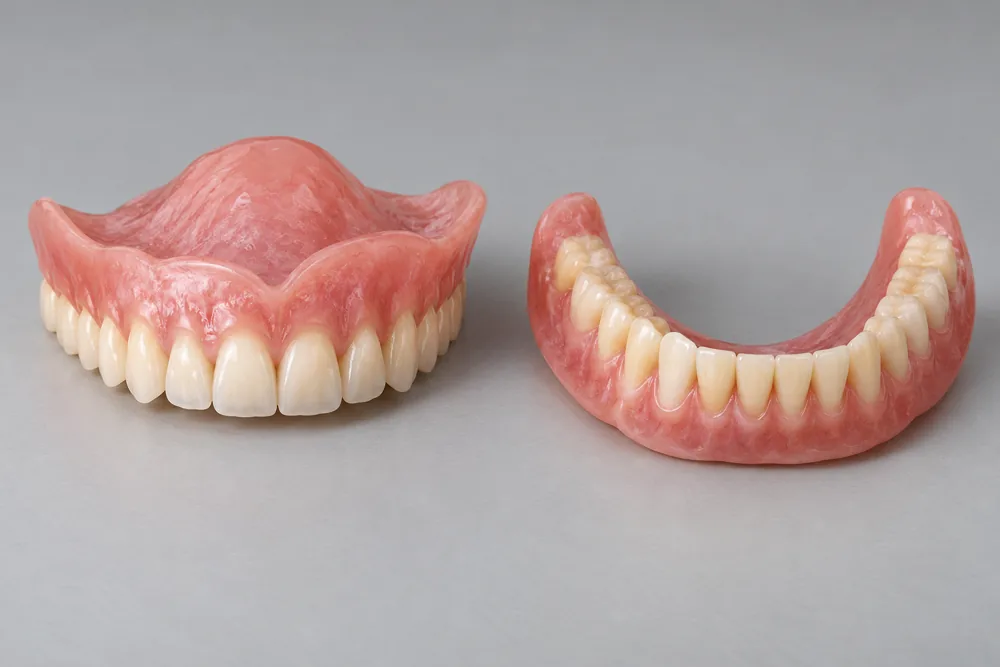
Replace all teeth in one arch. Tooth shade, shape and gum appearance are selected to suit your smile. The upper denture usually covers the palate; the lower leaves space for the tongue.
Flexible partial dentures
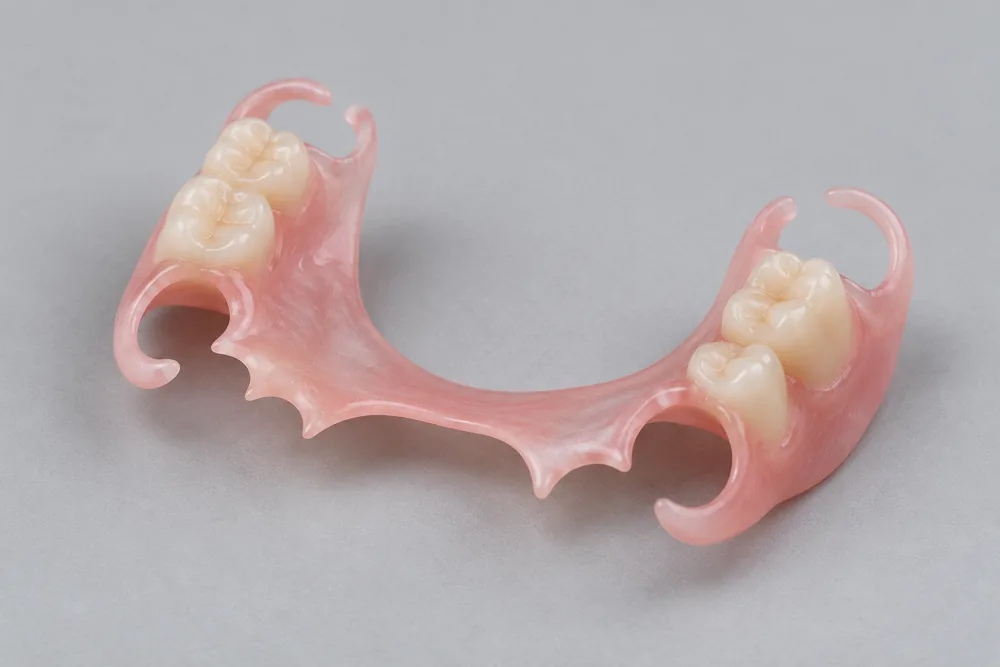
Replace selected missing teeth with a flexible gum-coloured base and clasps, without a visible metal framework in this example. Suitability depends on the remaining teeth, bite and support; flexible is one partial-denture material option.
From assessment to comfortable everyday use
01 · Assess and plan
We assess the gums, remaining teeth, bite and existing dentures. We discuss appearance, support, budget and alternatives before choosing the design.
02 · Record and try in
Impressions or scans and bite records guide fabrication. A try-in may let us review tooth position, shade, speech and bite before the final denture is made.
03 · Fit, adjust and review
We check the fit and bite, demonstrate insertion, removal and cleaning, and arrange adjustments. It takes practice to eat and speak with a new denture.
Images illustrate dental appliances and teaching models, not individual patient results. Implant-retained removable dentures are another option in selected cases; see Dental Implants.
Frequently asked questions
Can dentures look natural?
Yes. Tooth shade, shape, arrangement and gum colour can be planned for a natural appearance. A try-in, where appropriate, helps us discuss your preferences.
What is the difference between partial and complete dentures?
Partial dentures replace some teeth around remaining natural teeth. Complete dentures replace all teeth in one arch. Neither is the same as a fixed bridge.
Which is better: acrylic or metal-framework partial dentures?
Acrylic can be useful for an initial or adaptable replacement. A suitable metal framework can be thinner and rigid. The remaining teeth, support, cleaning access and budget guide the choice; no material suits everyone.
Can I eat normally straight away?
Start with soft foods cut into small pieces and chew slowly on both sides. Gradually add foods as comfort improves. Avoid testing very hard or sticky food during the early adjustment period.
Will speech change at first?
Some sounds may feel different initially. Reading aloud and practice often help. Tell us about persistent difficulties so the fit and tooth position can be checked.
Should I sleep with dentures in?
Usually remove them at night to rest the tissues, unless we give specific instructions, such as immediately after certain extractions. Follow the storage guidance for your appliance.
How do I clean dentures?
Remove and rinse after meals when practical. Brush gently with a soft denture brush and a suitable non-abrasive cleanser. Clean all fitting surfaces and follow the cleanser instructions. Keep remaining natural teeth clean with fluoride toothpaste.
Can I use hot water or bleach?
Avoid hot water because it can distort the denture. Do not use household bleach or unapproved cleaners, especially on metal components. Use a cleaner suitable for your exact denture and rinse thoroughly.
Why does my new denture feel bulky or cause sore spots?
A new appliance needs adaptation and may need small adjustments. Contact us for sore spots rather than filing or bending it yourself. Persistent ulcers or pain need assessment.
What if my denture becomes loose?
Gums and bone change over time. We check the fit and may discuss adjustment, relining, replacement or other support. Do not rely on increasing adhesive indefinitely to hide a poor fit.
Do I need denture adhesive?
Some people benefit from a suitable adhesive used as directed, but it is not a substitute for a well-assessed fit. Ask us which product and quantity suit your appliance.
Can implants help a loose denture?
Selected patients may benefit from implant-retained dentures. Assessment of bone, health, cleaning ability, surgery and cost is needed. See our dental implant page for more information.
Can I repair a broken denture myself?
Keep all pieces safely and contact us. Household glue can damage the appliance and is unsuitable in the mouth. Professional assessment determines whether repair is possible.
How long does a denture last?
There is no fixed lifespan. Wear, gum changes, comfort and fit guide whether relining, repair or replacement is needed. Regular oral checks remain useful even if you have no natural teeth.
How much do dentures cost in Mymensingh?
Cost depends on whether the denture is partial or complete, its material, laboratory work and any preparation or treatment needed. We explain the proposed plan and provide an individual quote.
Patient information sources
NHS: Dentures · Leeds Teaching Hospitals: Removable partial dentures
Ready to discuss your treatment?
Visit DentCare Dental Clinic in Charpara Mor, Mymensingh. We will assess your condition, explain the suitable options and help you choose the next step with confidence.