

Dental Filling
Clear information, careful assessment and a treatment plan designed around your comfort and long-term oral health.
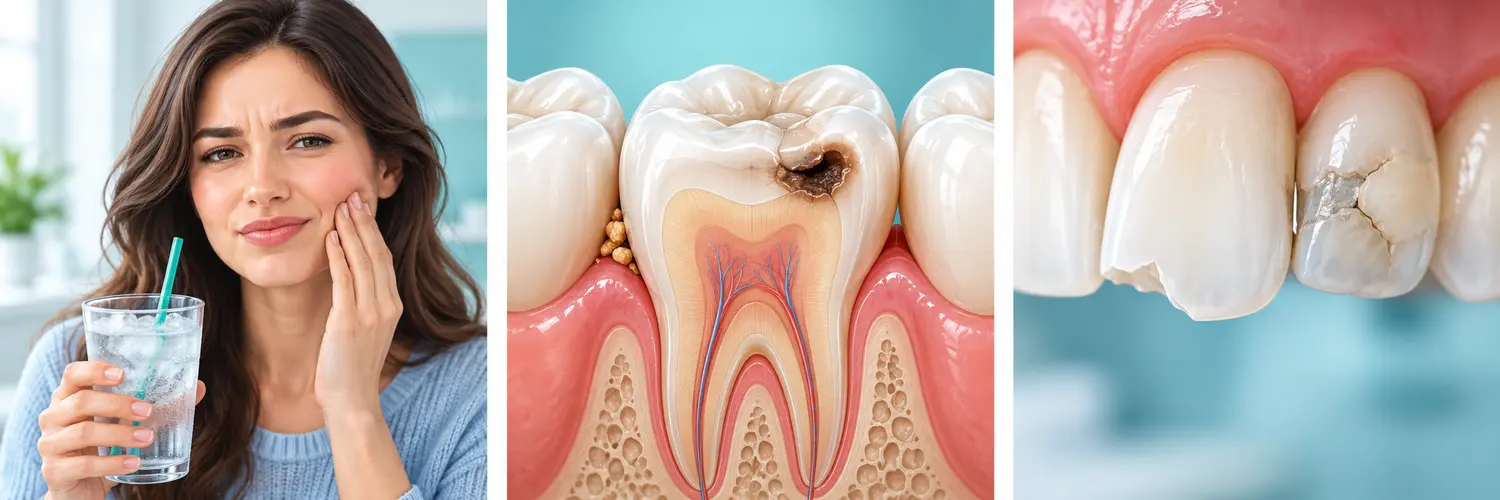
Cold or sweet sensitivity
A short, sharp response can occur when decay or enamel loss exposes a sensitive area.
Visible cavity or food trapping
A hole, dark area or repeated food trapping should be assessed before the cavity becomes deeper.
Chipped tooth or failing filling
A rough edge, crack, worn surface or filling that catches floss may need repair or replacement.
Dental Filling: what to know
A filling restores a cavity or a small damaged area after assessment and appropriate decay removal. Material choice depends on cavity size, moisture control and bite.
When might it be needed?
A cavity, food trapping, a damaged old filling or a small chip. Persistent or spontaneous pain needs a pulp assessment.
The choice follows an examination. Symptoms alone cannot identify the right treatment.
From a cavity to a tooth-coloured filling
See cavity assessment, preparation, light curing and the finished restoration. The curing view is a separate illustrative close-up.
01 · Assess the cavity
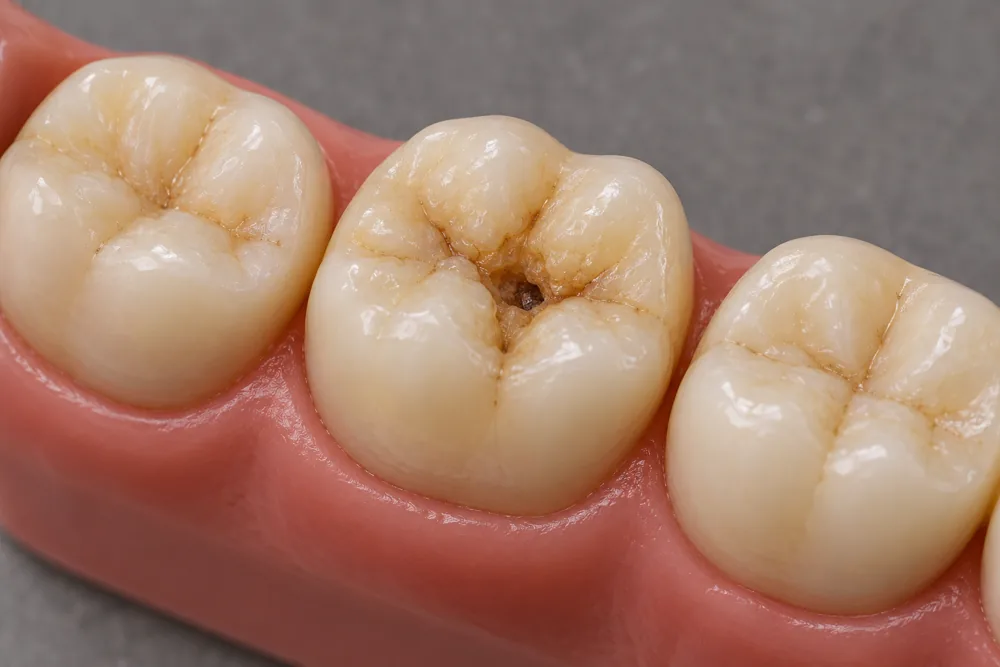
We examine the tooth, cavity depth and bite. X-rays and pulp tests are used when appropriate. Early decay without a hole may sometimes be managed preventively.
02 · Prepare and restore
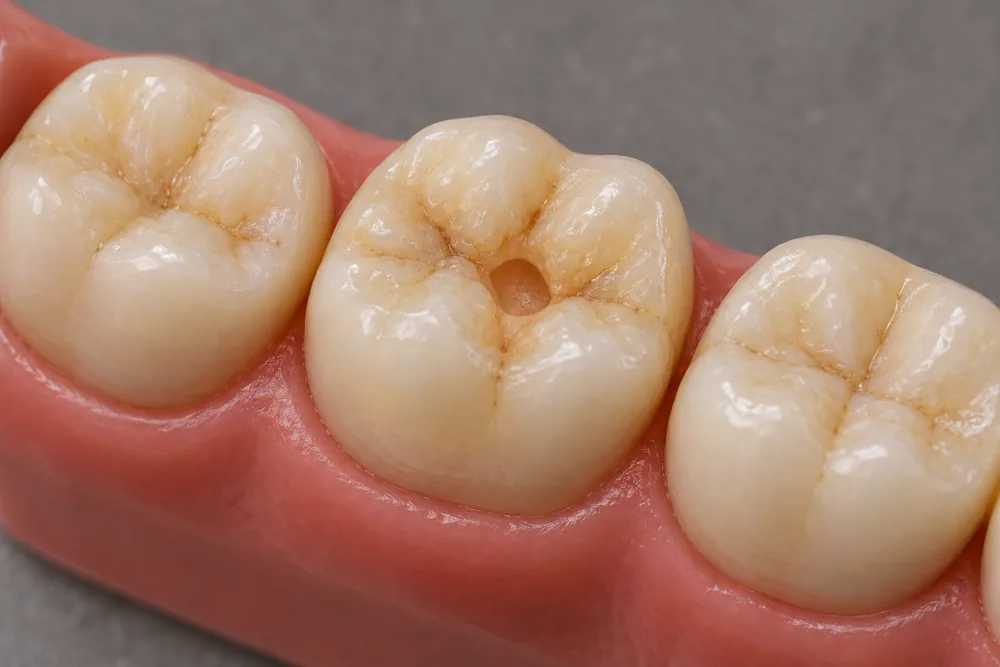
After suitable anaesthesia and moisture control, decay is managed conservatively. A suitable material is placed to seal the cavity while preserving healthy tooth structure.
03 · Light-cure the composite
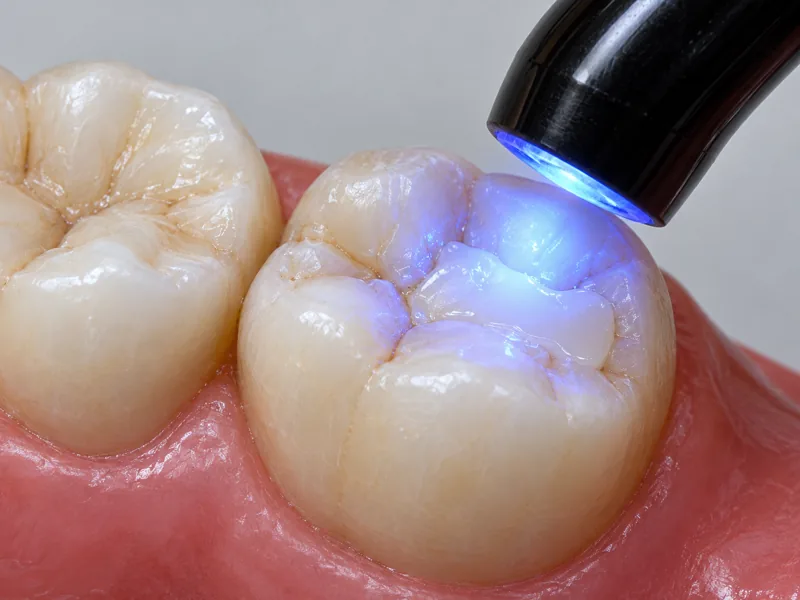
For a light-cure composite filling, we place the material in suitable increments and use a blue curing light to harden it according to the material instructions.
04 · Shape, polish and check
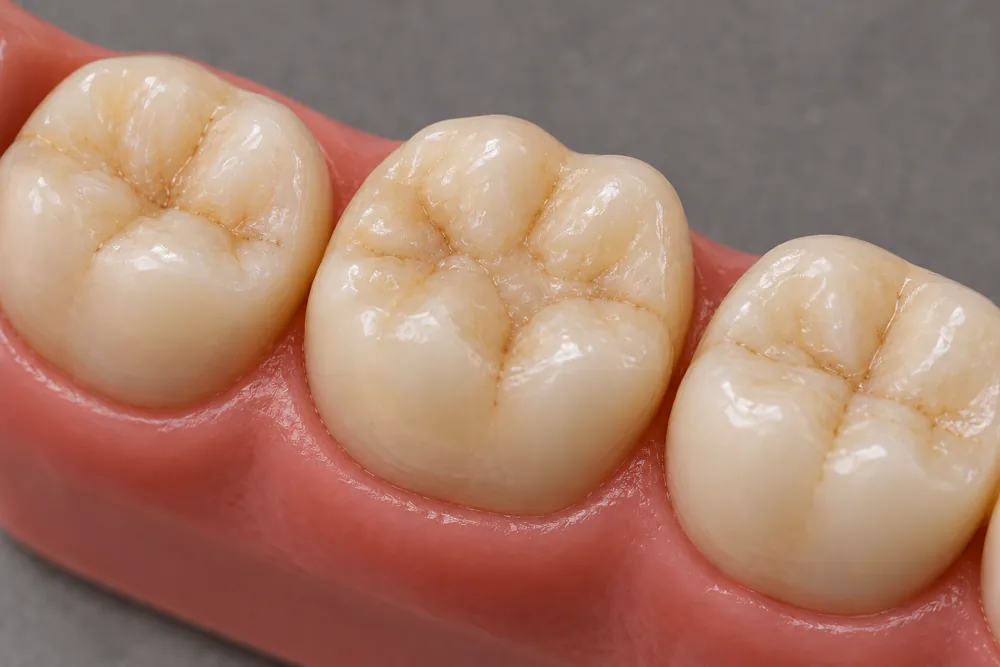
The filling is shaped to restore tooth form and contacts. We check the bite and polish the surface, then explain aftercare and review.
Illustrative teaching-model images explain the sequence; they are not patient before-and-after results. Cavity depth and treatment differ between teeth.
Filling materials: what matters to you?
A well-planned filling restores tooth shape, helps comfortable chewing and seals a suitable cavity. We match the material to your tooth and priorities.
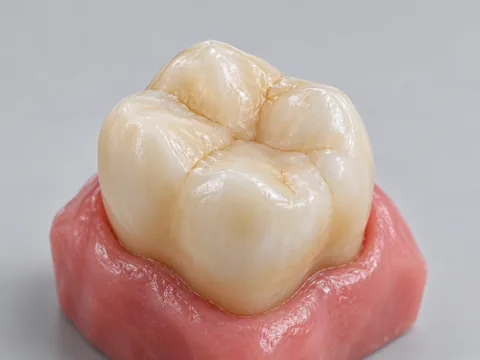
Composite / light-cure filling
Advantages: Tooth-coloured, closely shade-matched and bonded to the tooth. Commonly called a light-cure filling because a blue light hardens the composite. Useful for many front- and back-tooth cavities.
Keep in mind: Needs good moisture control; cavity size and biting forces affect durability.
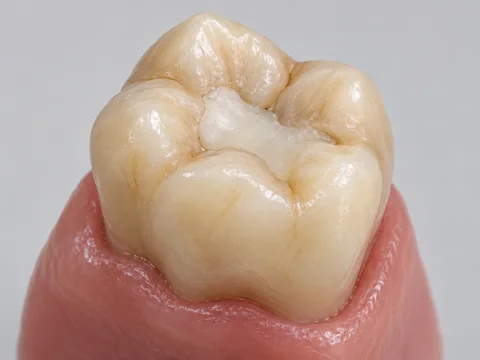
Glass-ionomer (GIC) filling
Advantages: Usually white or near tooth-coloured, with a slightly more opaque appearance than composite. Chemically bonds to tooth and releases fluoride. Useful in selected cavities, including some root-surface or lower-load areas.
Keep in mind: Material grade and position matter; it may be less suitable for heavy biting areas.
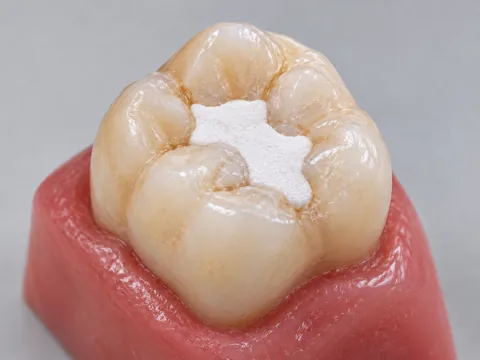
Temporary filling
Advantages: Often looks more chalky white; the exact shade depends on the product. Provides an interim seal between stages of treatment or while the next step is planned.
Keep in mind: Not intended to replace an appropriate long-term restoration; complete the planned follow-up.
These illustrative examples show typical appearances. Actual shade, translucency and finish vary with the material and tooth; colour alone cannot identify a filling.
Filling, pulp care or root canal?
Can a filling save my tooth?
A suitable cavity can often be restored with a filling. We assess the pulp before recommending a filling alone. A hole or dark spot does not tell us the full diagnosis.
What if decay is very deep?
Indirect pulp capping, direct pulp capping or pulpotomy may preserve suitable living pulp. Root Canal Treatment treats the canal system when preservation is unsuitable. These are different treatments for different findings.
What if much of the tooth is missing?
A suitable onlay or dental crown may support a heavily weakened tooth better than a large direct filling. This is assessed individually; a bridge replaces a missing tooth and is a different treatment.
Frequently asked questions
Is light-cure filling the same as composite filling?
People commonly use light-cure filling to mean a tooth-coloured composite filling. Light curing is the method used to harden a light-activated material with a dental curing light. The material, cavity and technique still determine suitability; some other dental materials also use light curing.
What is a tooth-coloured or composite filling?
Composite is a tooth-shaded resin material bonded to the tooth. It can restore suitable cavities and small damaged areas while matching the surrounding tooth shade.
Which filling material is best for me?
We consider cavity position and size, the bite, moisture control, appearance and cost. Composite, glass ionomer and temporary materials serve different purposes; no material is best for every cavity.
Can early decay be treated without a filling?
Sometimes. Early decay without a formed cavity may be managed with fluoride, improved cleaning and changes to sugar frequency. A hole or broken surface usually needs a different plan after assessment.
Is getting a filling painful?
Local anaesthetic can make treatment comfortable when needed. You may feel pressure or vibration. Tell us if anything hurts so we can adjust the care.
Does a deep cavity always need root canal treatment?
No. We assess the pulp and tooth. A filling or suitable pulp-preservation treatment may be possible. Root canal treatment is considered when the pulp or canal diagnosis requires it.
What is the difference between a filling and root canal filling?
A normal filling repairs the tooth above the roots. Root canal treatment cleans and seals the spaces inside the roots and also needs a suitable final restoration. A normal filling cannot disinfect an infected canal.
Can I get a filling in one visit?
Many straightforward direct fillings can be completed in one appointment. Large cavities, symptoms, multiple teeth or other required treatment can change the plan.
How long does a dental filling last?
There is no guaranteed lifespan. Material, cavity size, bite or grinding, decay risk, cleaning and review affect how long it serves. We check the edges and function during reviews.
Why is my tooth sensitive after a filling?
Some short-term sensitivity can occur, especially after a deep filling. Contact us if it is worsening, persistent, spontaneous or painful on biting; a high bite or pulp problem may need attention.
When can I eat after a filling?
Avoid chewing while numb so you do not bite your cheek or tongue. Eating advice also depends on the material and treatment; follow the instructions given for your restoration.
Can a white filling stain or chip?
Yes, staining, wear or a chip can develop over time. Cleaning, controlling staining habits and checking a heavy bite help. A small defect may sometimes be repaired rather than replacing the whole filling.
When is a crown or onlay better than a large filling?
If too little sound tooth remains, a suitable onlay or crown may provide more support and cuspal protection. We explain whether this extra coverage adds a benefit for your tooth.
What if my old filling falls out?
Keep the area clean, avoid hard chewing on that tooth and contact us. Do not use household glue. We check the tooth for decay, fracture and pulp symptoms before repair or replacement.
How much does a dental filling cost in Mymensingh?
Fees depend on the tooth, cavity size and number of surfaces, material and any additional care required. We assess the tooth and explain the quote and alternatives before treatment.
Patient information sources
Ready to discuss your treatment?
Visit DentCare Dental Clinic in Charpara Mor, Mymensingh. We will assess your condition, explain the suitable options and help you choose the next step with confidence.