

Dental Crowns
Clear information, careful assessment and a treatment plan designed around your comfort and long-term oral health.
What is a dental crown (tooth cap)?
A dental crown, often called a tooth cap or dental cap, is a custom-made covering that fits over a prepared tooth. It restores the shape and biting surface of a tooth that needs more support than a suitable filling alone can provide.
When is it considered?
- A damaged or heavily filled tooth needs protection after its restorability is assessed.
- A cracked, worn or weakened tooth may benefit from coverage; the type and depth of a crack matter.
- A root-treated tooth may need a protective restoration, depending on its position and remaining structure.
What is the aim?
Protect a suitable tooth and restore comfortable function with a carefully fitted, cleanable restoration.
How a tooth cap fits
See the lower fitting surface and the main stages of crown treatment.
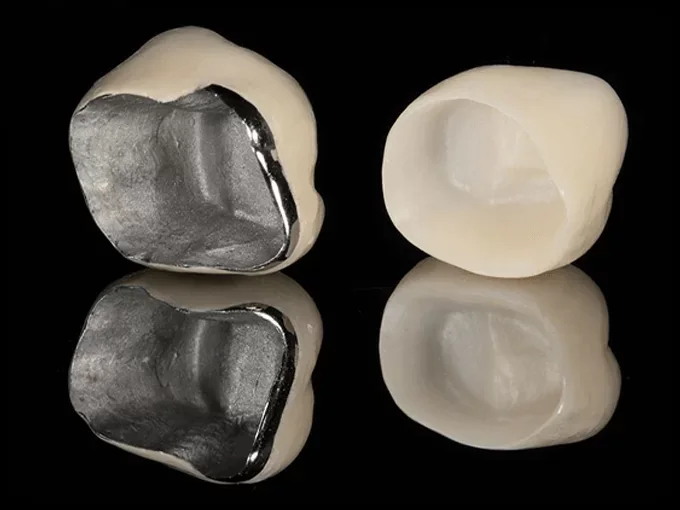
Why is a crown hollow underneath?
The opening on the lower side fits over the prepared tooth. The chewing surface and outer walls cover and protect the tooth. These examples show a metal-lined interior and a tooth-coloured interior; appearance alone does not identify the exact material.
The main treatment stages
01 · Assess the tooth and plan
We assess the remaining tooth, gum health, bite, shade and any symptoms. A filling or partial-coverage onlay may be a more conservative option in suitable teeth.
02 · Prepare, record and make the cap
The tooth is shaped to allow space for the restoration, and an impression or scan records its form. Temporary protection may be used while the laboratory makes the crown. The fitting surface is hollow underneath.
03 · Seat the crown and check the fit
The hollow crown is lowered over the prepared tooth, as the arrow shows. We check the fit, contacts, shade and bite before securing it with a suitable dental cement or bonding system. Regular cleaning and reviews help maintain the result.
The illustrations explain general concepts. The restoration is made to fit your individual tooth, supports and bite.
Choose a cap that suits your tooth and smile
A well-planned crown can protect a weakened tooth, restore comfortable chewing and improve its shape and appearance. We help you compare strength, shade, available space and budget. The images show both the outer crown and its hollow fitting surface.
Zirconia
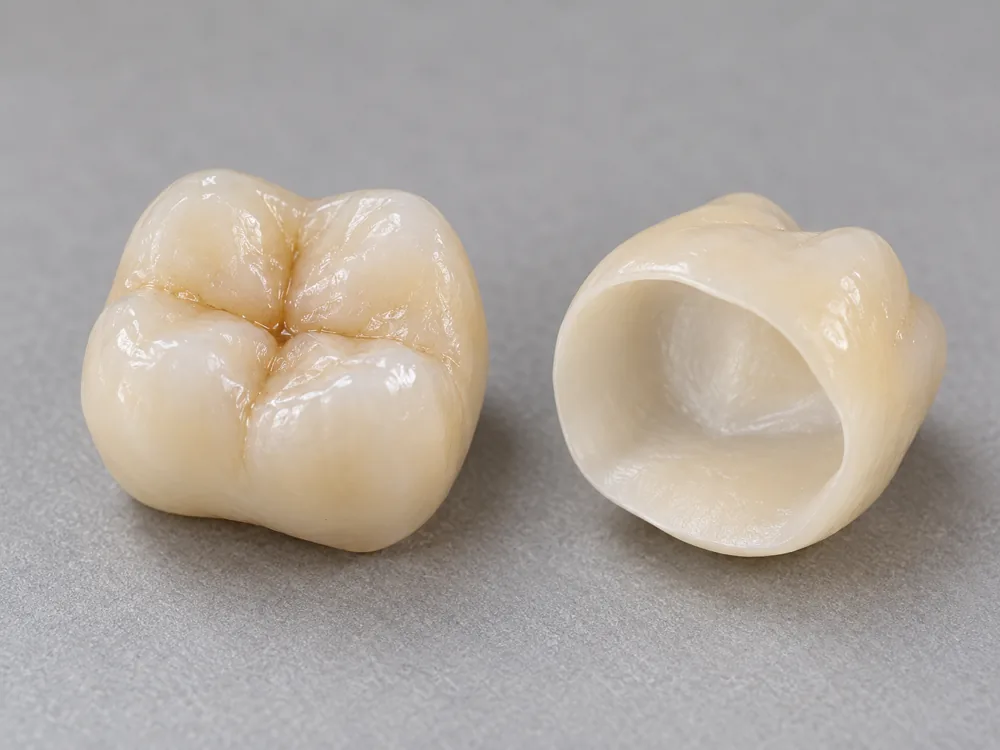
Strong, tooth-coloured ceramic
Advantages: High strength in suitable designs; natural-looking shades; no metal framework. A useful option when strength and appearance are both priorities.
Keep in mind: Grade and translucency vary. It may cost more than some PFM options. Careful polishing after bite adjustment helps protect opposing enamel.
Lithium-disilicate glass ceramic
Lifelike translucency and shade matching
Advantages: Excellent aesthetic potential, with light transmission and colour matching that can suit visible teeth. Metal-free and bonded to suitable tooth structure.
Keep in mind: Usually a higher-cost option. Adequate thickness, bonding and bite control help reduce the chance of ceramic chipping or fracture.
Porcelain fused to metal (PFM)
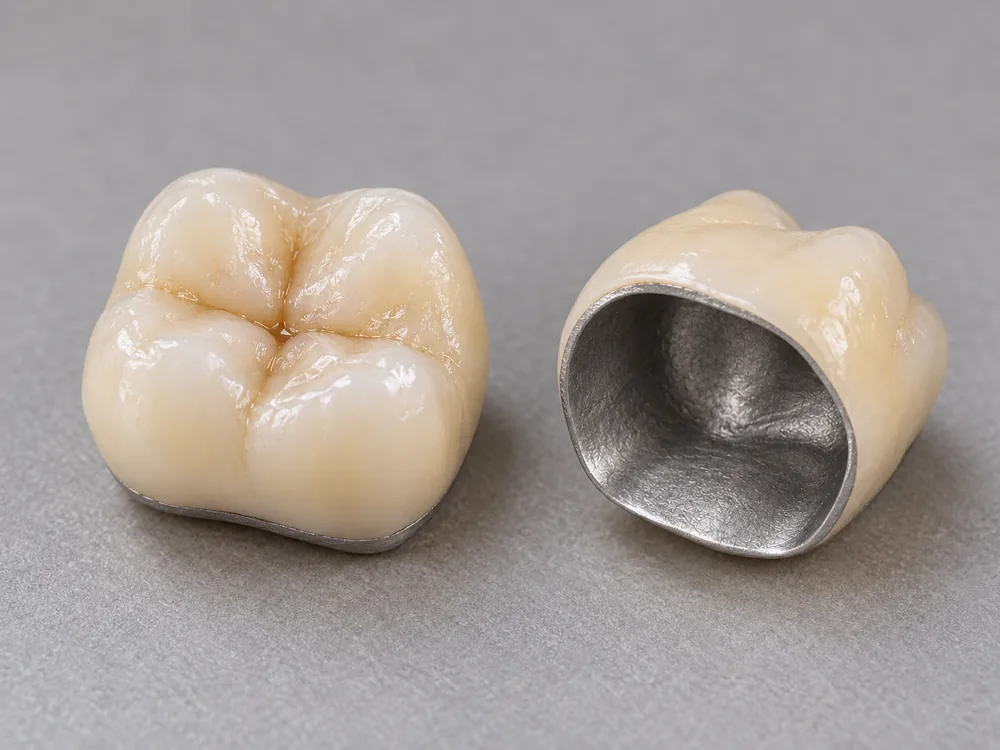
Metal support with a tooth-coloured porcelain layer
Advantages: An established combination of a strong metal framework and shade-matched porcelain. Often a more affordable tooth-coloured option than some all-ceramic restorations.
Keep in mind: The porcelain layer can chip, and a metal edge may become visible with gum recession. We check the bite and discuss any known metal allergy.
Full metal alloy
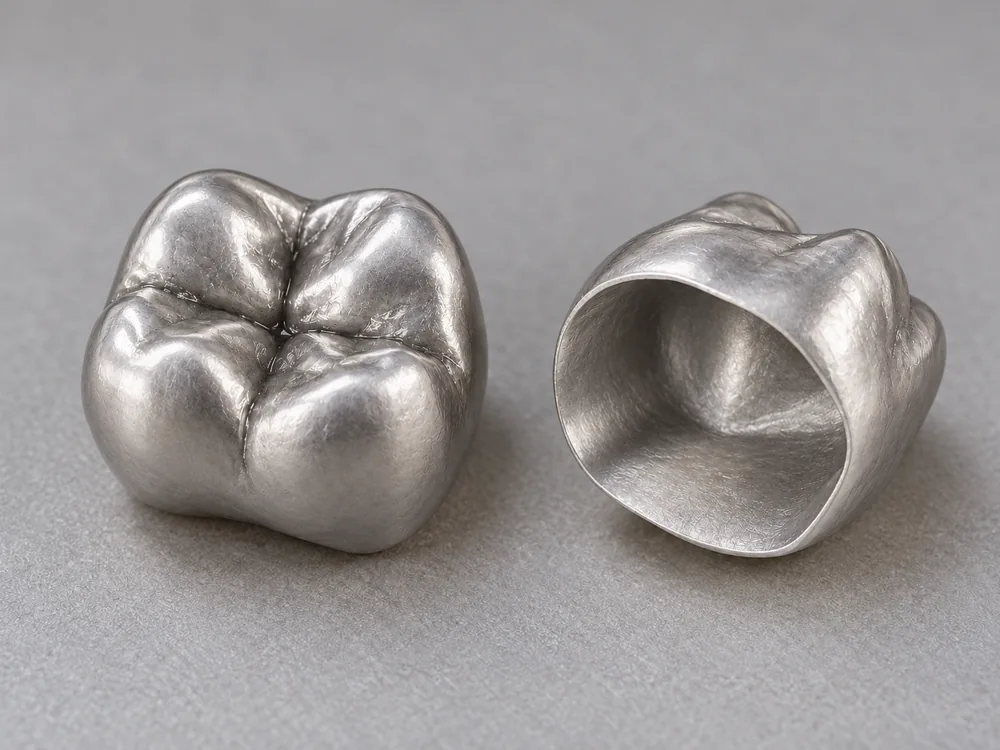
Strength with a thinner restoration
Advantages: Strong and resistant to porcelain chipping because there is no porcelain layer. A thinner design may suit limited biting space or a short clinical crown when retention can be achieved.
Keep in mind: Metal colour is visible. The alloy, remaining tooth height and bite guide suitability; additional retention may be needed for very short teeth.
Images are illustrative examples, not patient results. Ceramic appearance alone cannot identify the material. Daily cleaning and regular reviews help every type of crown serve well.
Compare crown materials
There is no single best cap for everyone. Appearance, strength, remaining tooth, grinding, surface finish and maintenance all matter.
On a small screen, swipe across the table.
| Comparison point | Zirconia | Glass ceramic | PFM | Metal alloy |
|---|---|---|---|---|
| Tooth-coloured outer surface | ✓ Yes | ✓ Yes | ✓ Yes (porcelain layer) | ✗ Metallic appearance |
| Metal framework inside the crown | ✗ No | ✗ No | ✓ Yes | ✓ Metal throughout |
| Main consideration | Strength, grade and finish | Appearance, space and bonding | Porcelain and metal framework | Visible colour and alloy choice |
| Can the restoration fracture or fail? | ✓ Yes | ✓ Yes | ✓ Yes | ✓ Yes; the tooth or cement can also fail |
| Cleaning and review needed | ✓ Yes | ✓ Yes | ✓ Yes | ✓ Yes |
Treatment choices worth discussing
Which cap is best for my tooth?
There is no single best crown for every person. We consider tooth position, remaining structure, bite or grinding, available space, gum health, appearance, allergies and budget. A well-made suitable design matters as much as the material name.
How is a crown different from a filling or bridge?
A Dental Filling repairs a suitable defect. A crown covers a prepared tooth. Dental Bridges replace a missing tooth using other supports. A cap does not replace a missing root by itself.
Will I need a root canal first?
Not automatically. Root Canal Treatment is considered when the pulp or canal condition requires it. We assess this before treatment; a tooth with living healthy pulp may receive a crown without root canal treatment.
Why is the cap open underneath?
The opening is the fitting surface that seats over the prepared tooth. The chewing surface and outer walls remain covered. The images show this hollow fitting surface underneath the crown.
Aftercare & review
At home
- Brush twice daily with fluoride toothpaste and clean between the teeth.
- Follow the temporary-crown instructions while the final restoration is being made.
- Avoid testing hard objects with the crown; discuss grinding or clenching with us.
Reviews & concerns
- Report a high bite, persistent pain, sensitivity, bleeding or food trapping.
- Attend reviews so we can assess the margin, gum health and underlying tooth.
- If a cap loosens, keep it safely and contact us; do not use household glue.
Frequently asked questions
Is a tooth cap the same as a dental crown?
Yes. Tooth cap, dental cap and crown commonly describe the same covering restoration. A crown is different from direct or indirect pulp capping, which treats the pulp or deep dentin inside a tooth.
Which cap is best: zirconia, ceramic, PFM or metal?
The best option depends on the tooth and your priorities. We balance the remaining tooth, bite, appearance, space, allergies, maintenance and cost rather than choosing by a material name alone.
Is zirconia a metal crown?
A zirconia crown is made from zirconium-dioxide ceramic, rather than a metal-alloy framework. Different zirconia products have different properties. Other work inside the tooth, such as a post, may still contain metal.
Is e.max the same as every ceramic cap?
No. e.max is a brand associated with particular ceramic systems; lithium disilicate is one material commonly discussed under that name. Ceramic is a broad category, so ask which exact material and design are proposed.
Can I choose a natural-looking cap for a front tooth?
Often a suitable tooth-coloured design can be made. The underlying tooth shade, gum line, available space, lighting and neighbouring teeth all affect the result. We discuss the shade and shape before final fitting.
Does every cap need root canal treatment first?
No. We assess the pulp and the condition of the tooth. Root canal treatment is recommended for an appropriate diagnosis, not simply because a cap is being made.
Why might a root canal tooth need a cap?
A root-treated tooth may have lost substantial structure. Protective coverage can reduce damaging stresses in suitable cases, especially where biting forces and missing walls make a simple filling less suitable. The restoration is selected individually.
Can a filling or onlay be used instead?
Sometimes. A filling, onlay or other partial-coverage restoration may preserve more tooth when sufficient healthy structure and a suitable bite remain. We explain whether full coverage adds a useful benefit.
Why is a crown hollow on its lower side?
That hollow surface fits over the prepared tooth. It should not be shown as a large hole through the outer side wall. Your fitting surface and margin are made to match the individual tooth.
Will a metal cap or PFM crown cause a problem with MRI?
Most people with fixed dental crowns can have an MRI, and a well-fixed crown usually does not need to be removed. Tell the radiologist or MRI technologist about your crowns, bridges, posts and implants before scanning. Dental materials may create image artefacts near the mouth, so this information helps the team interpret the images and plan the scan. The MRI team completes the usual safety screening and confirms suitability for your particular restoration and examination.
Does choosing zirconia mean I can skip MRI screening?
No. Tell the MRI team about all dental work, including posts, implants and attachments. Material identity and the scan being planned still matter; a metal-free outer crown does not describe everything inside your mouth.
Can a metal cap cause an allergy?
Some people react to particular dental-alloy components, such as nickel. Tell us about previous reactions or known allergies so the proposed material can be reviewed. Symptoms around a crown can also have other causes.
Why can a dark line appear near a PFM cap?
A metal margin or a thin gum edge can make a darker line visible. Recession, staining and other problems may also affect the appearance. We assess the cause before suggesting replacement.
Can the tooth still decay or hurt under a cap?
Yes. The natural tooth and the margin still need care. Decay, gum problems, cracks or pulp disease can cause symptoms. A new or persistent painful bite should be assessed rather than ignored.
How long will a dental crown last?
There is no guaranteed lifespan. Fit, remaining tooth, decay risk, bite or grinding, daily cleaning and review all influence how long it serves. The crown and its supporting tooth can both develop problems.
Will whitening change the colour of my cap?
A crown does not whiten in the same way as natural enamel. Discuss whitening plans before shade selection so the restoration can be planned alongside the surrounding teeth.
What should I do if my cap comes off or chips?
Keep any loose restoration safely and contact us. Avoid chewing on the affected tooth and do not use household glue. We check the tooth and restoration before deciding whether repair, re-cementation or replacement is appropriate.
How much does a tooth cap cost in Mymensingh?
The quote depends on the material, laboratory work, tooth condition and any required build-up or other treatment. We provide an individual plan and explain what is included; the lowest price alone does not establish suitability.
Ready to discuss your treatment?
Visit DentCare Dental Clinic in Charpara Mor, Mymensingh. We will assess your condition, explain the suitable options and help you choose the next step with confidence.